
The best broadhead for turkey
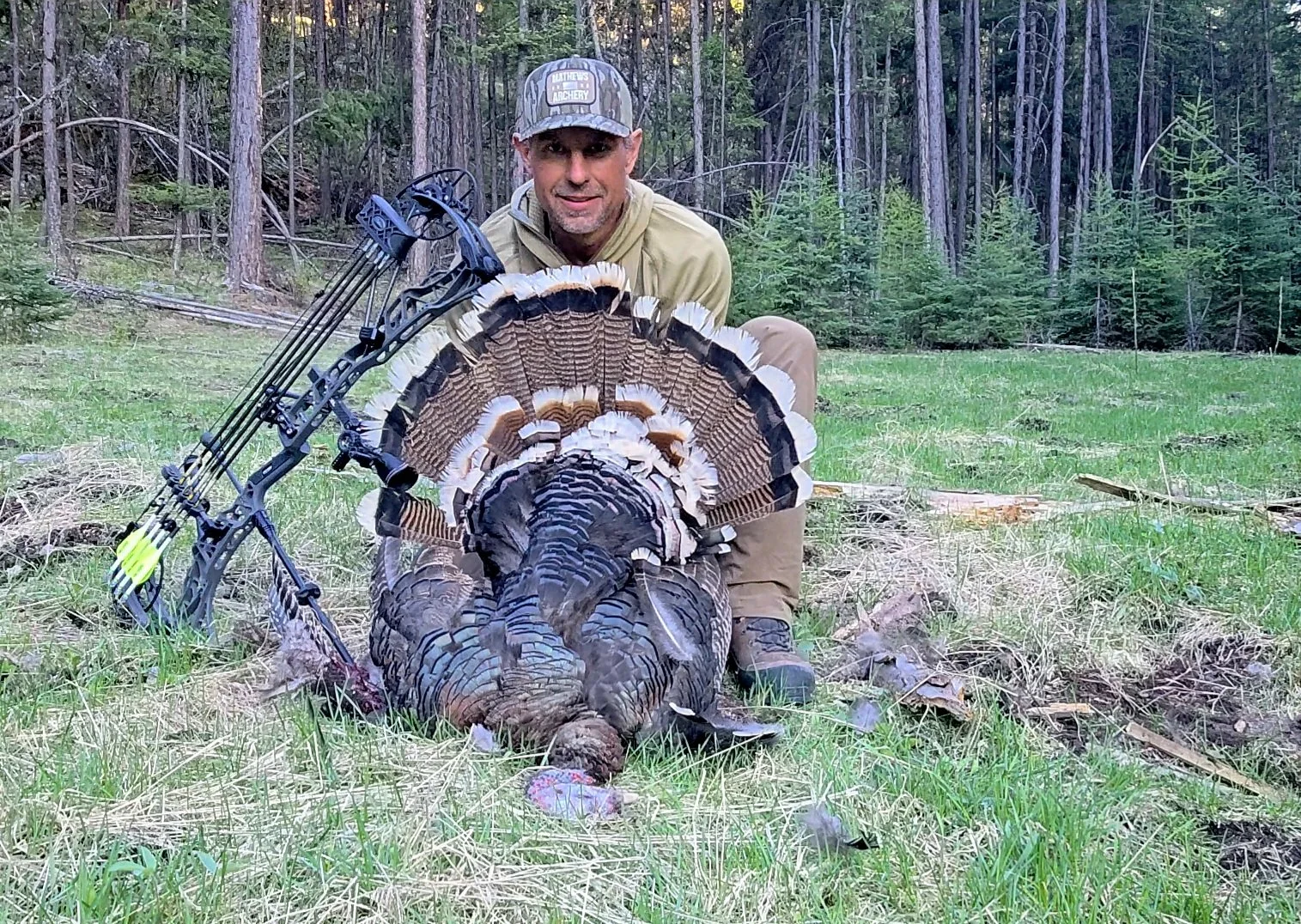
Choosing the best broadhead for Turkey Hunting
With lots of debate over mechanical vs fixed blade broadheads for turkey hunting, Kevin Toye shares his thoughts.
Bowhunting spring turkey has exploded in popularity in the past few years and for good reason. There is nothing quite like bowhunting. It’s up close and personal, and with a turkey, up close and personal is about as good as it gets. The challenge of calling a wary gobbler into bow range, drawing undetected, and making a precise shot on a small vital area is what keeps hunters coming back every spring.
One of the most important decisions a bowhunter can make for turkey season is choosing the right broadhead. Mechanical broadheads are generally preferred for turkey hunting because of their large cutting diameters, which often range from about 1.5 to over 2 inches. On a small, thin‑skinned bird like a turkey, that big cutting surface can be a game changer. The large wound channel created by a mechanical head maximizes internal damage and increases the odds of a quick, clean kill, even if the shot is slightly off center. Another advantage is their flight characteristics. Most modern mechanical broadheads fly very similar to field points, which means many hunters can screw them on without extensive bow tuning and still maintain excellent accuracy. This is a big benefit for turkey hunters who may be taking shots in awkward positions from blinds or natural cover. The main downside to mechanical heads is the possibility of failure to deploy or blade breakage. Although modern designs have improved significantly, there is still more that can go wrong simply because there are moving parts. For most turkey hunters, however, the tradeoff is worth it, making mechanicals the go‑to choice for general spring turkey bowhunting when maximum tissue damage and forgiveness on marginal hits are the priority.
Fixed blade broadheads also have a strong place in turkey hunting, especially for archers who value reliability above all else. Fixed blades have no moving parts, so there is virtually zero chance of mechanical failure. They are built for durability and are less likely to bend or break if they encounter bone or other tough structures. This toughness and consistency appeal to hunters who want dependable penetration and performance shot after shot. The tradeoff is that fixed heads usually have smaller cutting diameters than mechanicals, so they demand more precise shot placement. On a turkey, where the vital area is already small and well protected by feathers and wing bones, that means the hunter must know turkey anatomy very well and be confident in putting the arrow exactly where it needs to go. Fixed blades can also be more finicky to tune and may require more effort to get flying perfectly with a given bow setup. For hunters willing to put in that work and who trust their accuracy, fixed heads remain an excellent option.
Beyond the choice between mechanical and fixed heads, there are specialized broadheads made just for turkeys, particularly decapitation heads. These large fixed‑blade designs, such as the Bowmar broadheads and similar models, are engineered specifically to take off a turkey’s head or neck. Their cutting diameters can be enormous compared to standard hunting heads, and when used correctly, a head or neck shot with one of these broadheads results in an instant, decisive kill. Because these heads are so large and create a lot of drag, they require careful setup and practice, and they are best used at relatively close ranges. Still, for hunters who enjoy the challenge and drama of a true “head shot,” decapitation heads offer a unique and highly effective option.
Regardless of broadhead choice, shot placement is the most critical factor in bowhunting turkeys. Turkeys have small vital areas packed tightly within a relatively round body, and their feathers can make it difficult to read where the vitals actually are. While turkeys are not heavily muscled animals, their dense feathers can slow an arrow slightly, and their wing bones can deflect or absorb some of the arrow’s energy. The good news is that you do not need deep penetration to kill a turkey cleanly. In many cases, around four inches of well‑placed penetration into the vitals is more than enough. This reality reinforces why broadheads with larger cutting diameters are so popular; they increase the margin for error when aiming at such a compact target.
In the end, choosing the right broadhead for spring turkey bowhunting comes down to your hunting style and confidence level. If you value big cutting diameters, forgiving performance on marginal shots, and field‑point‑like flight, mechanical broadheads are an excellent choice. If you prize durability, reliability, and trust your ability to hit a small spot every time, fixed blades will serve you well. For those who want an all‑or‑nothing, dramatic kill, decapitation heads offer a specialized but incredibly effective solution. Combined with good calling, careful setup, and disciplined shot selection, the right broadhead helps turn the thrilling, up‑close encounter of spring turkey bowhunting into a successful and ethical harvest.
Kevin Toye | Hunt Source