
How time change affects wildlife
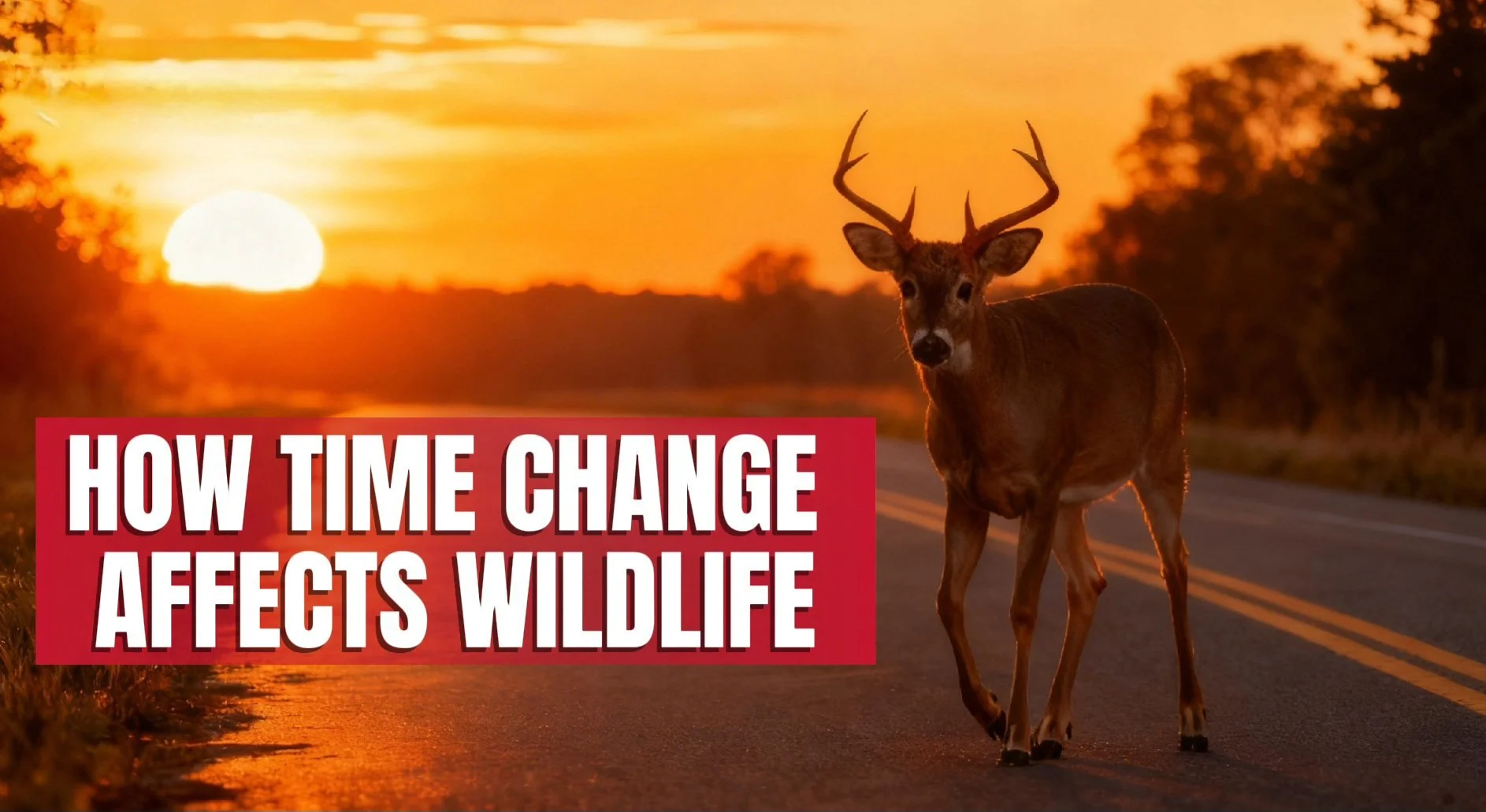
AFFECTS OF TIME CHANGE ON WILDLIFE
As British Columbia prepares for its final time change and the adoption of a permanent “spring forward,” the generations-long debate over seasonal clock changes is nearing its end. First introduced in 1915 to conserve daylight, time change has been argued over on the grounds of productivity, health, and energy savings. Yet one question is often overlooked: How does time change affect wildlife?
Changing the time does more than make people tired for a few days. It abruptly reshapes our daily routines—when we wake, drive, work, and return home. These routines intersect with the natural world, especially on roads that cut through wildlife habitat. Animals do not adjust to the clock; their movements are guided by light and seasons. During the transition after a time change, this mismatch between human schedules and animal activity can be dangerous.
The most visible impact is on road safety. When commuting hours suddenly shift into darker periods, human–wildlife encounters rise. Deer and similar species are most active at dawn and dusk, and when heavy traffic moves into these low-light times, collisions increase. A 2022 study by Cunningham and colleagues found a 16 percent spike in deer–vehicle collisions linked to the autumn time change, when clocks move back and evening commutes fall after dark.
This is made worse by the fact that the fall time change coincides with the deer rut, when animals are more active and less cautious. Hunters have long known that this is when deer move most, often crossing roads and open areas. When this natural surge in movement overlaps with a sudden shift in traffic patterns, collisions become more likely. The result is a kind of perfect storm: more animals on the move just as more drivers are unexpectedly traveling in the dark.
The consequences are serious for both people and wildlife. Vehicle–wildlife collisions in Canada are estimated to cost insurance companies around $200 million each year. They also take a human toll. Roughly 27 to 30 people are killed annually in wildlife-related crashes, and more than 870 are injured badly enough to need medical care. Large animals such as deer and moose can cause severe damage and life-threatening injuries when struck.
Some regions face particularly high risks. Alberta, Ontario, and Quebec record the highest numbers of fatalities, and British Columbia also sees a large number of incidents. In BC, an estimated 10,000 or more wildlife–vehicle collisions occur every year, leading to about three deaths, over 250 injuries, and more than $21 million in vehicle damage claims. Newfoundland faces its own distinct challenge, with about two people killed annually in collisions with moose, which are especially dangerous because of their size and height.
When broader costs are considered, the economic impact climbs even higher. Beyond insurance claims are losses in tourism and hunting revenue, along with the expense of emergency response, carcass removal, and road repair. For many provinces, the total cost runs into the millions of dollars each year.
In this context, the move to a permanent time setting gains added importance. By eliminating abrupt shifts in human activity, a year-round “spring forward” could help stabilize traffic patterns relative to animal movement. While it will not prevent all collisions, it may reduce the sharp post–time change spikes, particularly in the fall.Efforts such as the Wildlife Collision Prevention Program and guidance from Transport Canada already work to reduce these risks through better road design, driver education, and measures like fencing, wildlife crossings, and improved signage. But as long as societies adjust the clock, time itself remains a hidden factor in when and where people and animals meet.
As British Columbia adopts a permanent time standard, the decision can be seen not only as a matter of convenience or productivity, but also as a change that may subtly alter our relationship with wildlife. Ending seasonal clock changes could mean fewer confused commutes, fewer animals on roads at suddenly riskier hours, and fewer collisions with devastating human and economic costs. Time is not only something we measure; it is something we share with the animals that move through our landscapes, whether or not we notice.
Hunt Source