
$6000 for Killing grizzly
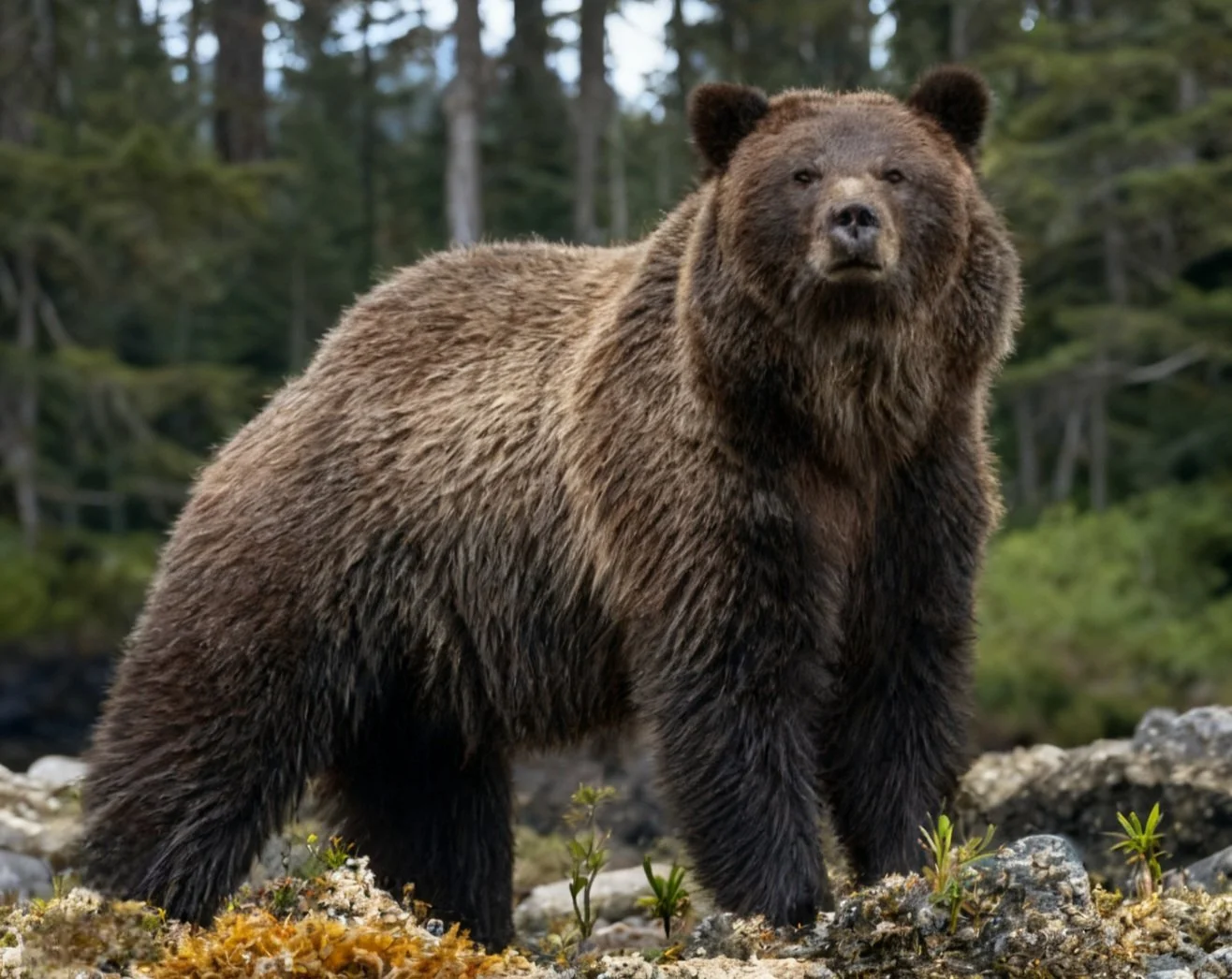
Two BC residents fined $6000 for killing local grizzly bear.
Kevin Toye | Hunt Source
Two residents of Texada Island, a small community off British Columbia’s Sunshine Coast, have been ordered to pay a combined $6,000 in fines after admitting to killing a grizzly bear that had become a lightning rod for local tension and debate. The decision, delivered Thursday in provincial court, followed guilty pleas from both individuals to charges under B.C.’s Wildlife Act for failing to promptly report the wounding or killing of a grizzly bear. The B.C. Conservation Officer Service (BCCOS) announced the outcome in a news release, underscoring the legal requirement to immediately notify authorities when such incidents occur.
The grizzly at the centre of the case, known to island residents as “Tex,” had been the subject of controversy for weeks before its death. Texada Island is not considered typical habitat for grizzly bears, and the animal’s unexpected presence quickly attracted attention and concern. Prior to the shooting, Tex had already been trapped and relocated once from another area, a move intended to address earlier conflicts. Despite this intervention, reports began to surface in the weeks leading up to the bear’s death that Tex was stalking people along rural roads and property lines, and harassing livestock kept by local farmers. These accounts heightened anxiety among some residents, many of whom felt that the bear posed an escalating risk and argued that more decisive action, including euthanization, might be necessary to protect public safety.
Not everyone on the island agreed with that view. As fears grew in some quarters, others in the community, including local Indigenous leaders, called for non-lethal responses and more comprehensive prevention measures. They argued that the bear’s behaviour, while concerning, might be managed through a combination of relocation and better control of human-related attractants, such as unsecured garbage, compost, and livestock feed. For these residents, Tex was not simply a threat but a symbol of broader questions about coexistence with wildlife and the human responsibility to reduce the conditions that bring large carnivores into conflict with people.
This division of opinion set the stage for a contentious public debate over how to handle Tex. Conservation officers assessed the situation and publicly expressed the view that Tex was not a good candidate for another relocation, citing the bear’s history and the apparent level of risk it posed to humans and domestic animals. From their perspective, repeated relocations often fail when a bear has already become habituated to human areas and food sources. Yet the story did not end there. The local First Nation put forward an alternative, offering to develop and lead a plan to safely relocate the bear away from Texada Island. After discussions between Indigenous leaders and provincial officials, the B.C. government agreed to this proposal, approving the First Nation–led relocation plan. For those opposed to killing the bear, this decision represented a hopeful compromise: Tex could be removed from the island and given another chance elsewhere, while the safety concerns of islanders might also be addressed.
Before that plan could be put into action, however, the situation took a tragic and irreversible turn. In July, the RCMP received a report that a grizzly bear on Texada Island had been shot and wounded. Conservation officers were dispatched to investigate the report, and when they arrived, they found Tex already dead. An ensuing investigation by the B.C. Conservation Officer Service traced the killing to two local residents. Critically, the investigation determined that after shooting the bear, the individuals failed to report the incident promptly, as required under provincial law when a grizzly is wounded or killed. This delay in reporting not only violated the Wildlife Act but also prevented authorities from responding in a timely way—whether to ensure public safety, to collect the carcass for examination and evidence, or to determine whether the animal might have been suffering and in need of humane dispatch.
Under British Columbia’s Wildlife Act, grizzly bears are among the protected species that trigger a strict reporting obligation. Anyone who wounds or kills such an animal must notify conservation officers right away. The law is designed to support effective wildlife management, uphold public safety, and preserve evidence in potential enforcement actions. By failing to meet this obligation, the two residents faced charges that ultimately led to their guilty pleas in provincial court. The judge imposed a fine of $3,000 on each individual, for a total of $6,000. Of each $3,000 fine, $2,000 is earmarked for the Habitat Conservation Trust Foundation, an organization that supports habitat conservation, restoration initiatives, and wildlife research across British Columbia. Directing a portion of fines to this foundation is a common practice in the province, intended to ensure that money collected from wildlife-related offences is reinvested into projects that benefit ecosystems and species, including those affected by human conflict.
Although the events unfolded in a relatively small and remote community, the story of Tex resonates with larger issues in wildlife management throughout British Columbia and beyond. Grizzly bears are powerful apex predators whose presence near human settlements can carry real risks, particularly when they begin to associate people with easy access to food. At the same time, grizzlies hold deep cultural significance for many First Nations and are central to ongoing conservation efforts that seek to maintain healthy bear populations and intact ecosystems. These competing realities make the management of so‑called “problem bears” especially complex. Authorities and communities must balance public safety with animal welfare, ecological considerations, and Indigenous rights and perspectives. Decisions about whether to relocate, monitor, or kill an individual bear can become flashpoints that expose deeper disagreements about how humans should share landscapes with large carnivores and who gets to decide the terms of that coexistence.
In Texada Island’s case, the planned First Nation–led relocation and the subsequent unauthorized killing of Tex brought these tensions into sharp relief. For supporters of the relocation plan, the bear’s death represented not only the loss of an animal that might have been moved but also a setback for collaborative, Indigenous-driven approaches to wildlife management. For others, it may have seemed like a grim but necessary resolution to a situation they viewed as dangerous and urgent. The court’s ruling and the fines imposed do not address the underlying divisions within the community, but they do reaffirm the legal expectation that any lethal incident involving a grizzly bear must be promptly reported to authorities. In its statement, the B.C. Conservation Officer Service did not release the names of the two individuals involved. Instead, it stressed the importance of immediate reporting whenever a grizzly is wounded or killed, emphasizing that only with timely information can officers investigate properly, ensure public safety, and make informed decisions about how to respond when humans and wildlife come into conflict.